IOU Architecture — Slide Deck
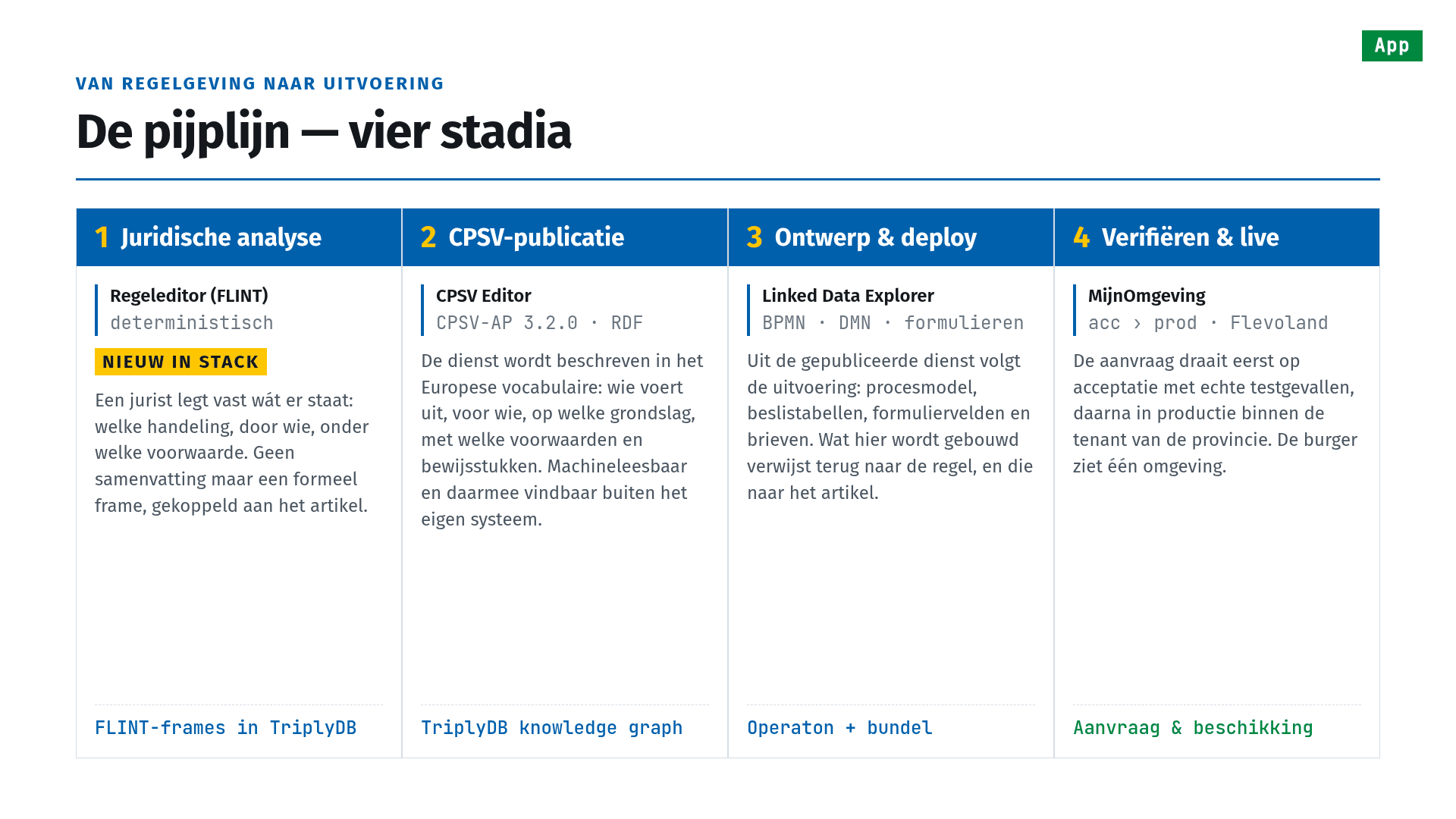
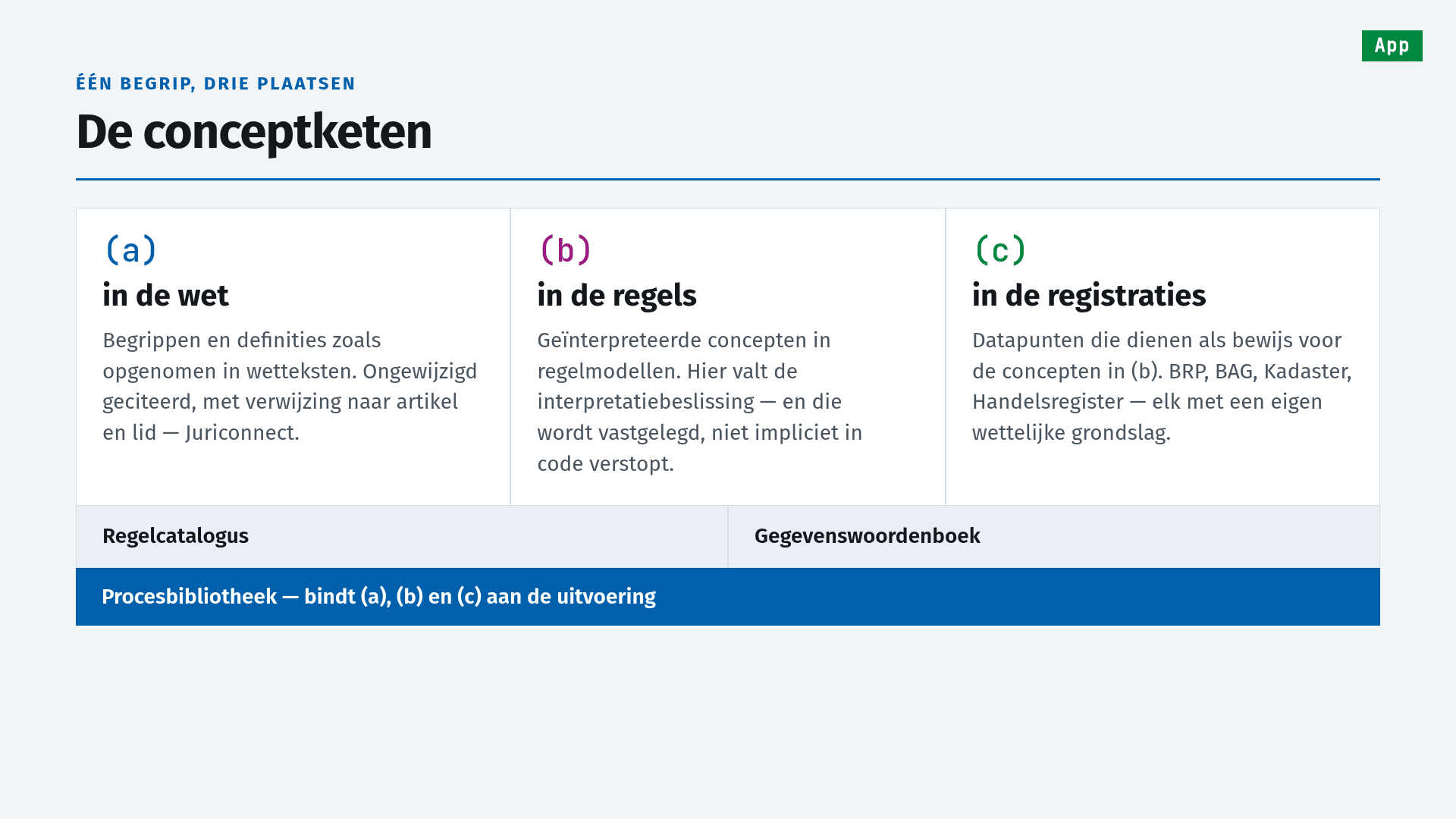
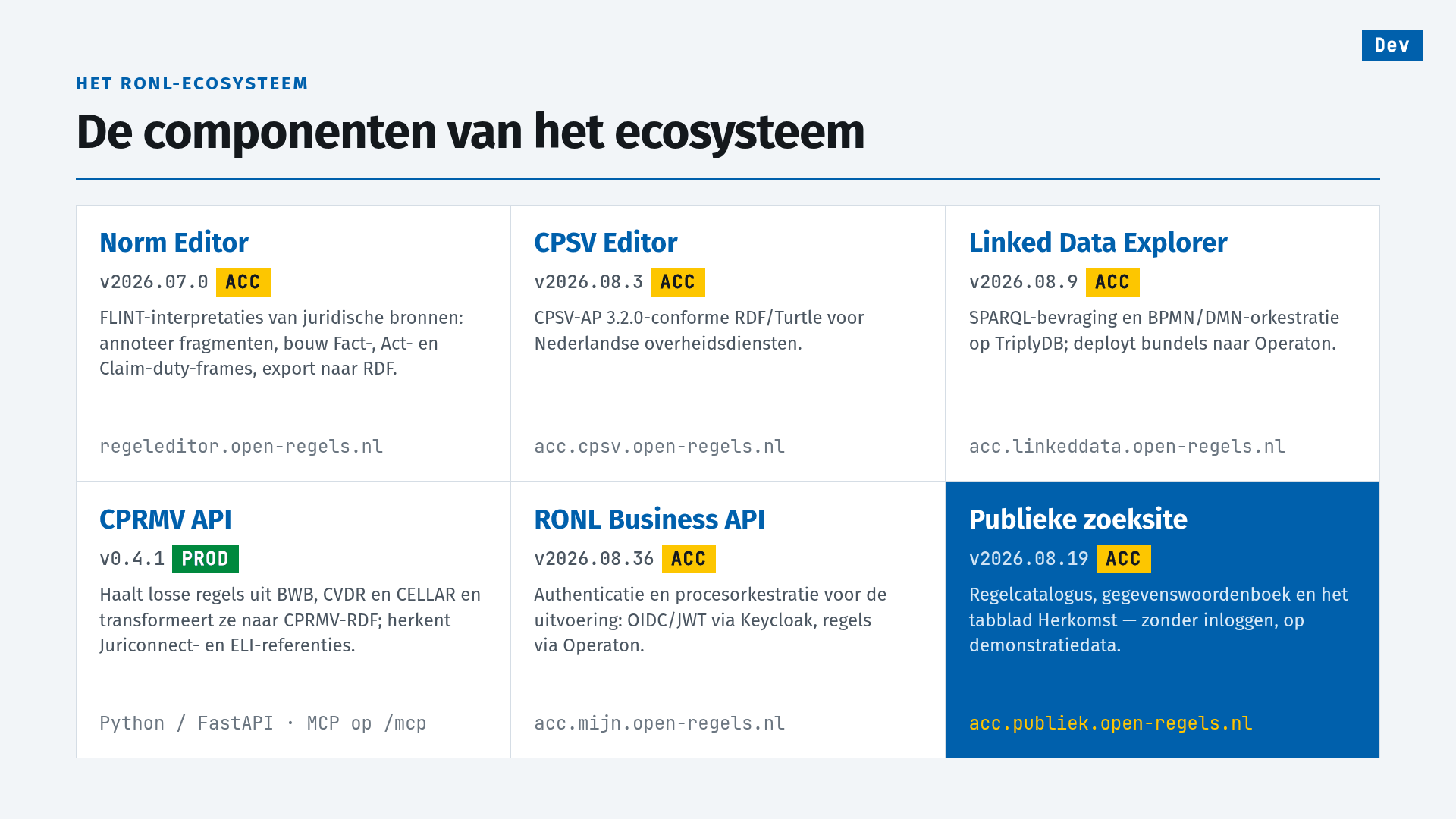
A 25-slide overview of the whole ecosystem, IOU-architectuur — van geciteerde wettekst tot het besluit dat de burger ziet (from quoted legal text to the decision the citizen sees). It comes in two parts. App explains what people see: the problem the architecture answers, the four boards of the provincial work environment, the public knowledge base, and the design principle underneath them. Dev explains how it is built and kept safe: the components and standards, the evidence each board carries, the way the work is done, and the gates in front of acceptance and production. It ends with three decisions.
Every slide carries a badge in its top-right corner, App (functional) or Dev (technical), so either half can be presented on its own.
Download
IOU Architecture Deck (PDF, 1.0 MB)
The slides are in Dutch, in the Provincie Flevoland house style. The captions and descriptions on this page are in English. This copy reflects the deck as of 30 August 2026, with component versions as recorded on the documentation site that day.
What has changed since 30 August
A deck is a snapshot of its date. These slides make claims the documentation has since re-checked and updated. The pages linked below are current; the slides are not.
| Slide | The deck says | Since then |
|---|---|---|
| 16 | CPSV Editor v2026.08.3 and Linked Data Explorer v2026.08.9, both on ACC | Both are on PROD at v2026.09.4. The header of each component page carries its current version |
| 21 | Ten rules in ~/.claude/CLAUDE.md |
Eleven, as of 9 September — see Skills and Boundaries |
| 22 | The acc ruleset requires the audit check; the Linked Data Explorer has seven workflows and the CPSV Editor three |
In both applications, acc requires audit and scan, the Semgrep code and dependency scan. The Linked Data Explorer has eight workflows, the CPSV Editor four — see Code Standards |
| 23 | main carries none of this; the gate is on acc only |
The Linked Data Explorer's main requires the same audit and scan checks as its acc. The CPSV Editor's main requires a pull request and no status checks, by decision — see Supply-Chain Pinning |
| 24 | Six repositories on git.open-regels.nl |
The CPSV Editor and the Linked Data Explorer are developed on GitHub and mirrored to GitLab by hand, and this site takes its pull requests on GitHub — see Contributing |
The RONL Business API figures (slides 7, 8, 10, 18, 19, 22 and 23) have not been re-checked against a later release here.
Part one — App: what the user sees
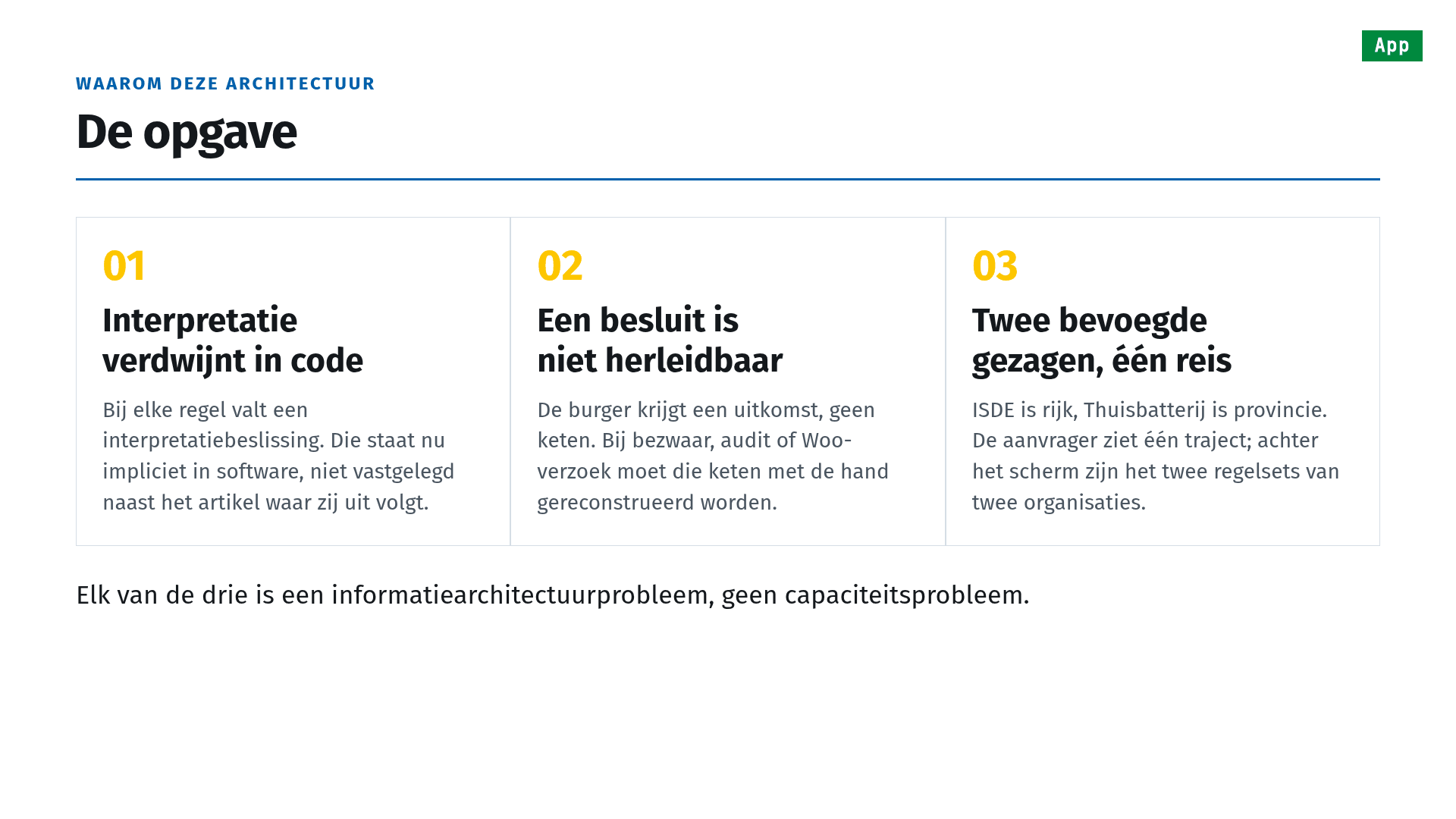
Why this architecture
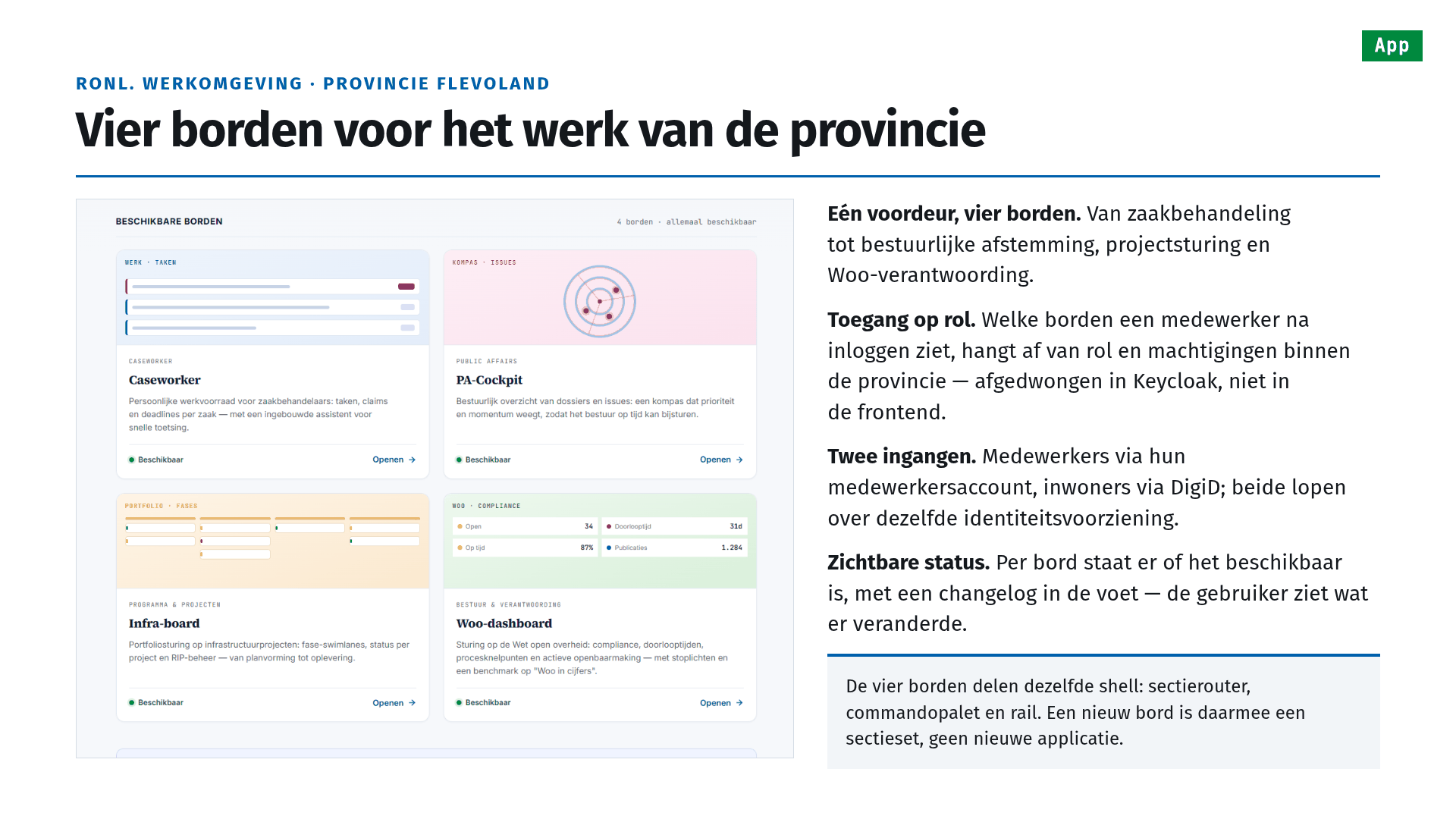
The four boards
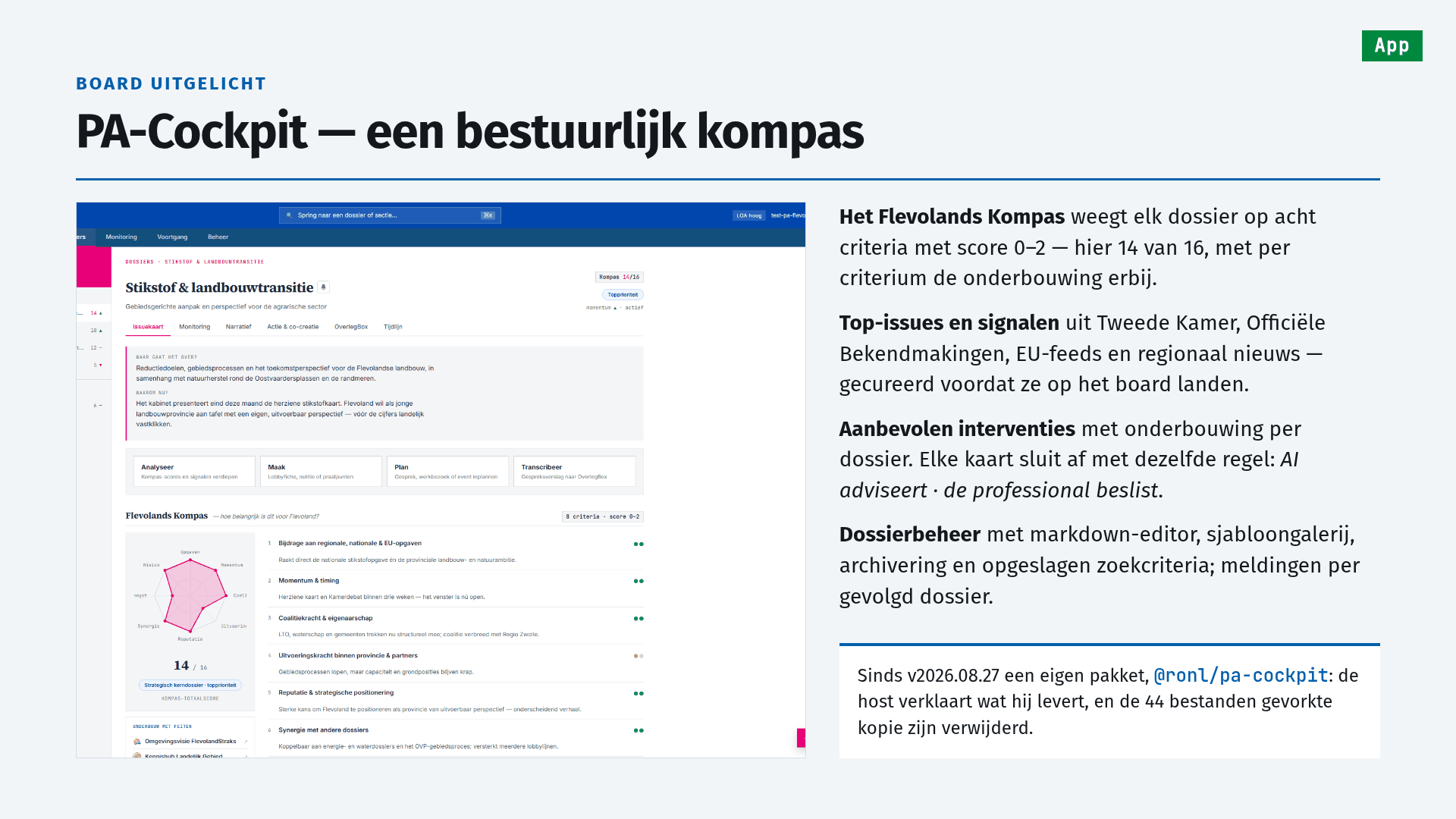
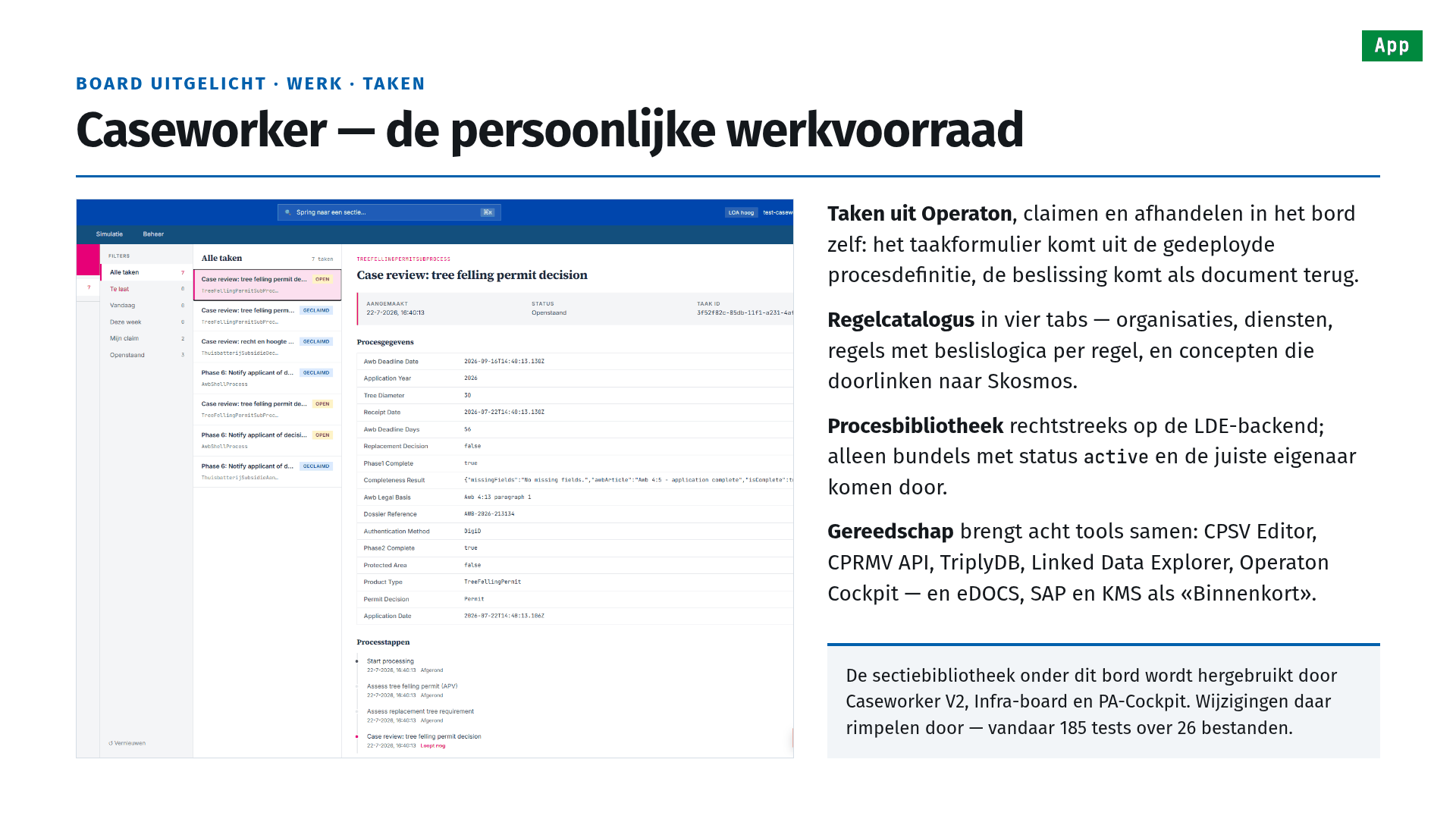
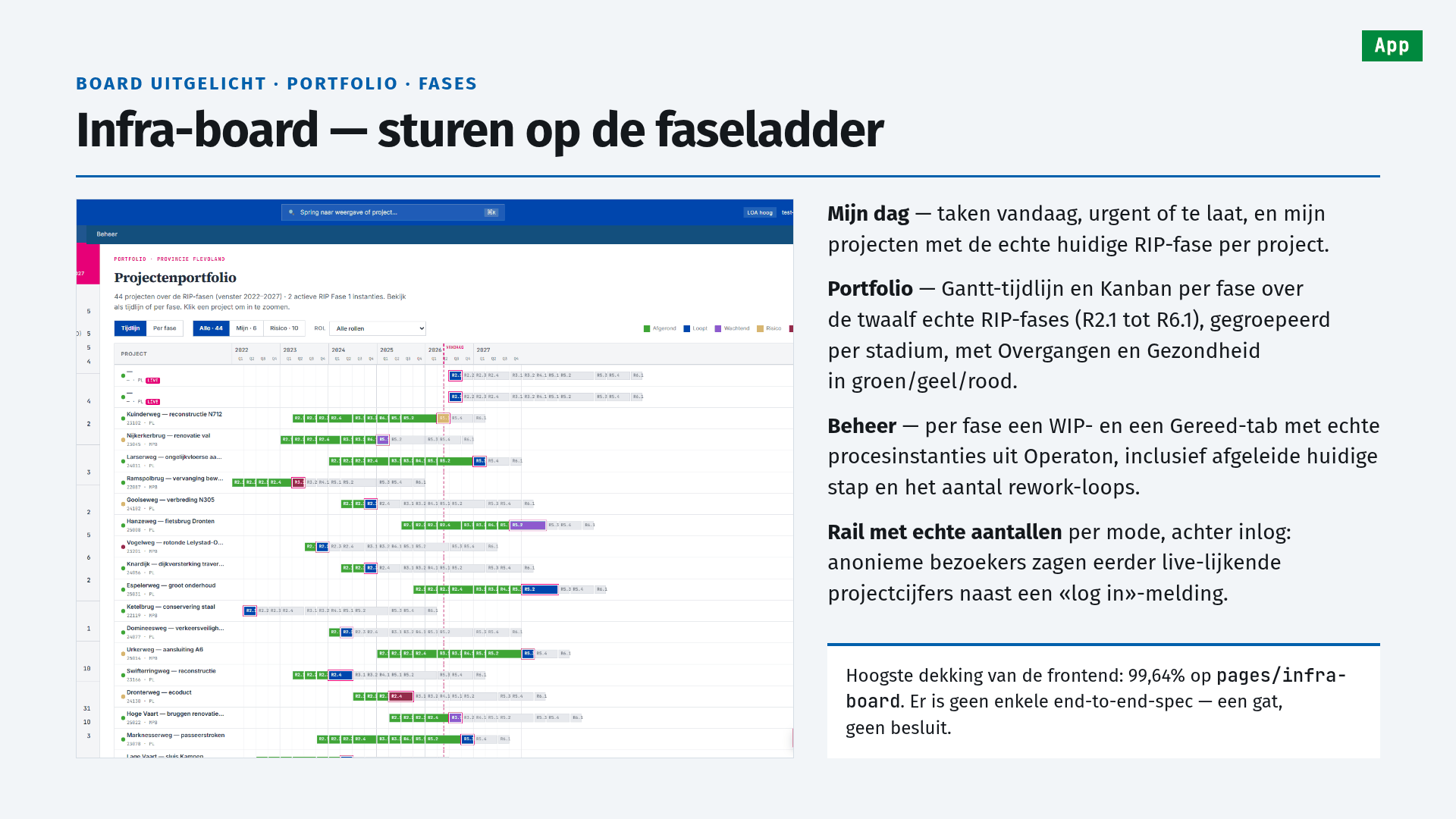
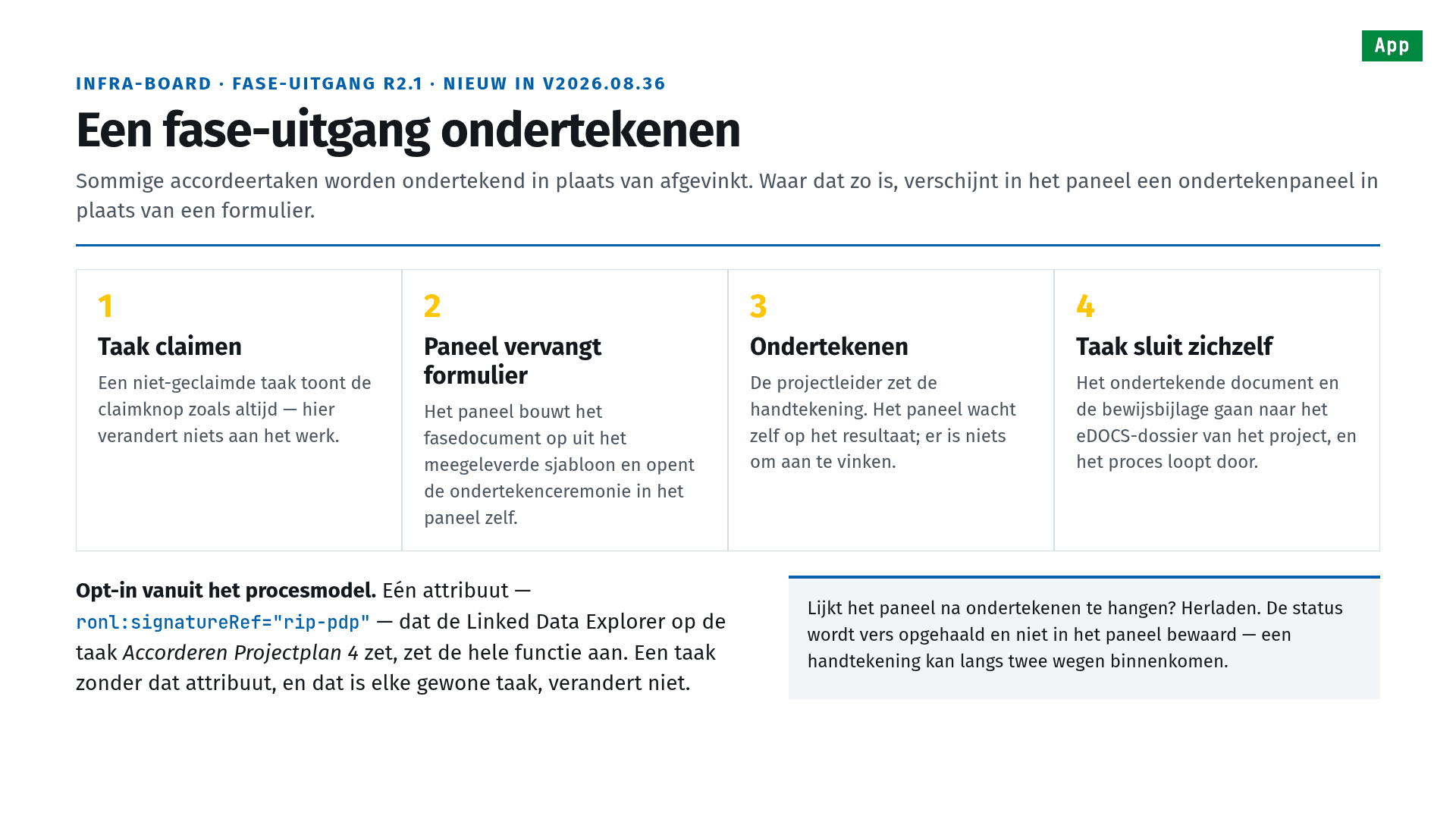
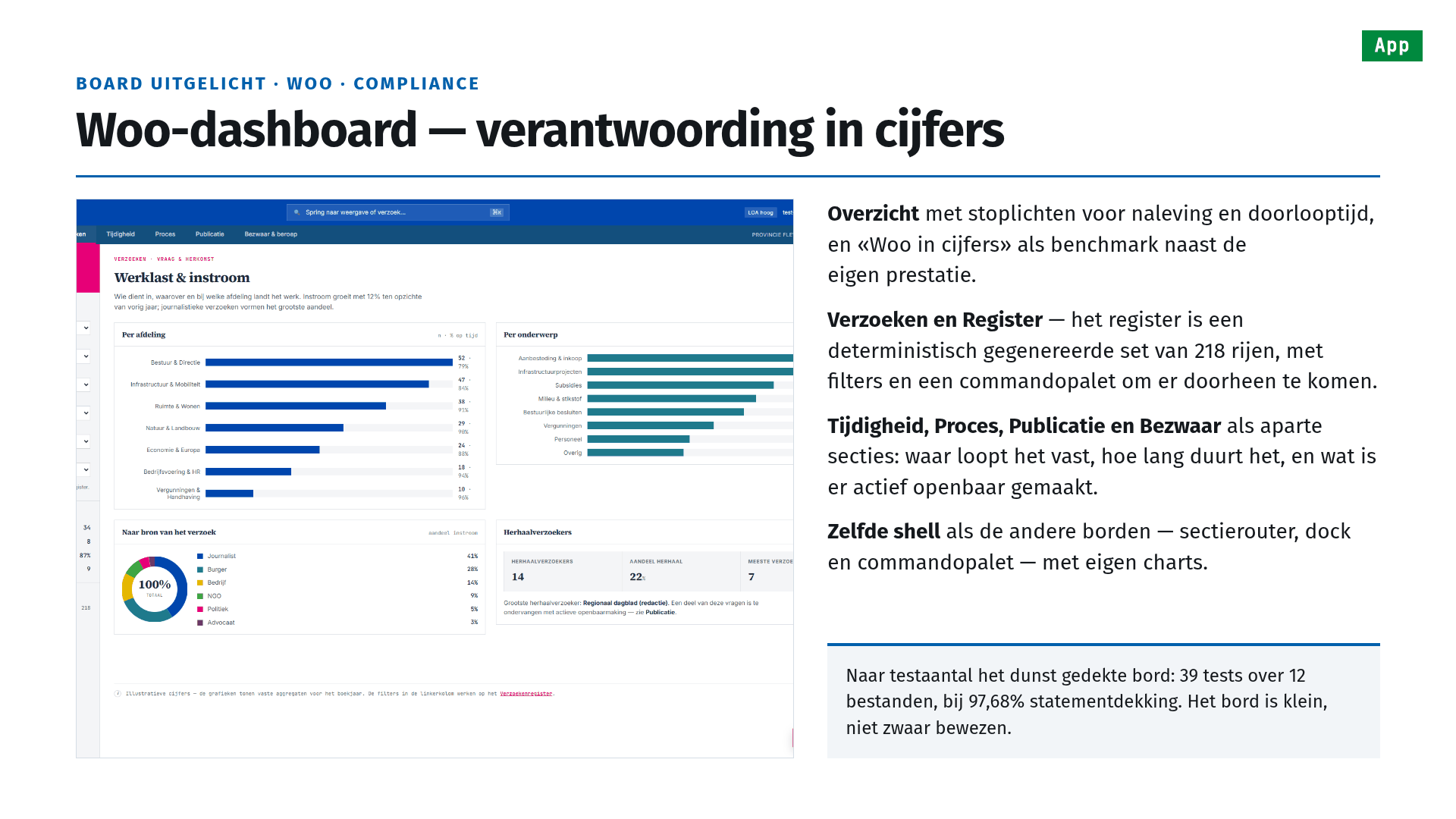
The work environment of the RONL Business API. Each board has its own user guide: Caseworker, PA-Cockpit, Infra-board and Woo-dashboard.
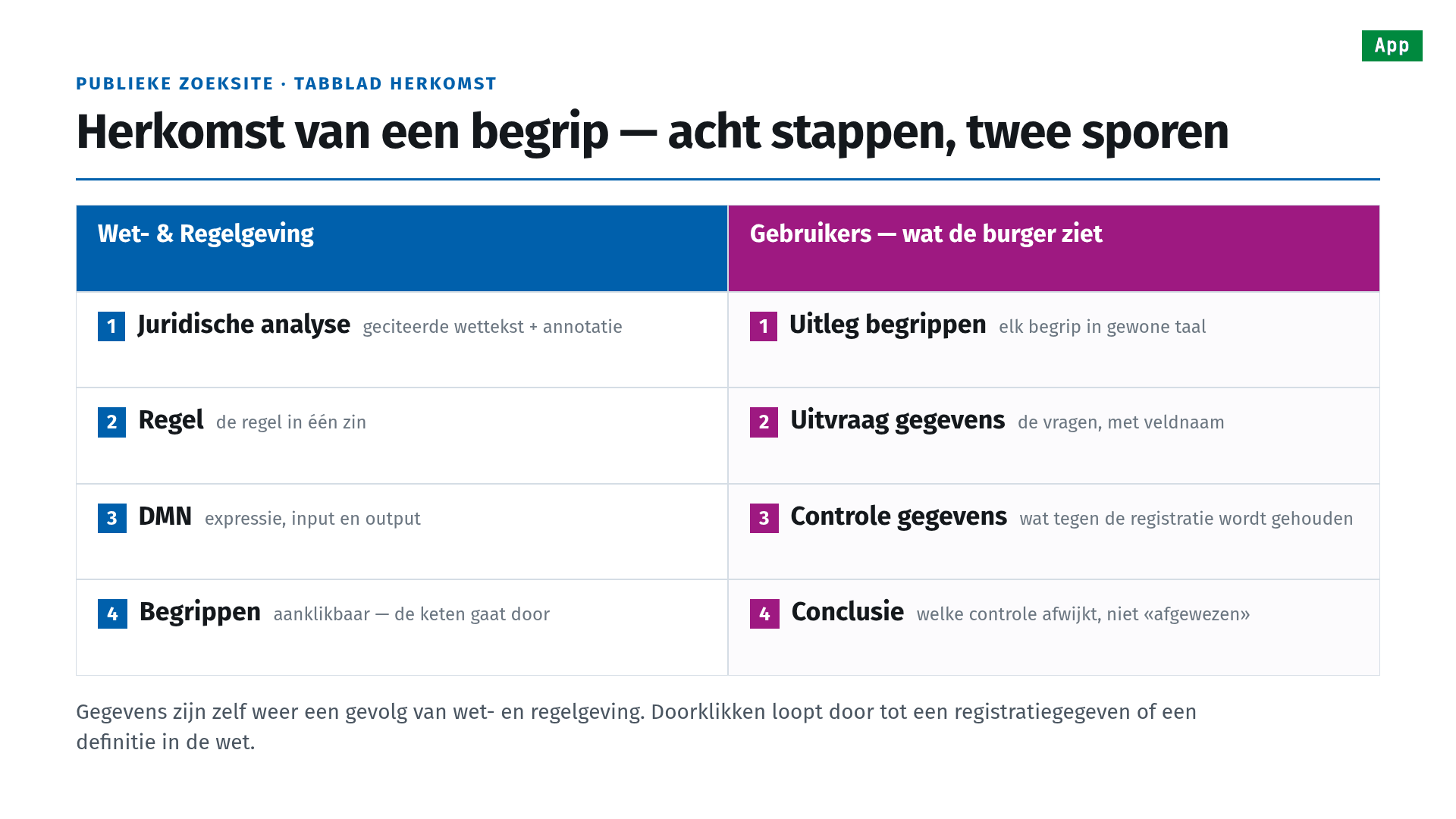
The public knowledge base
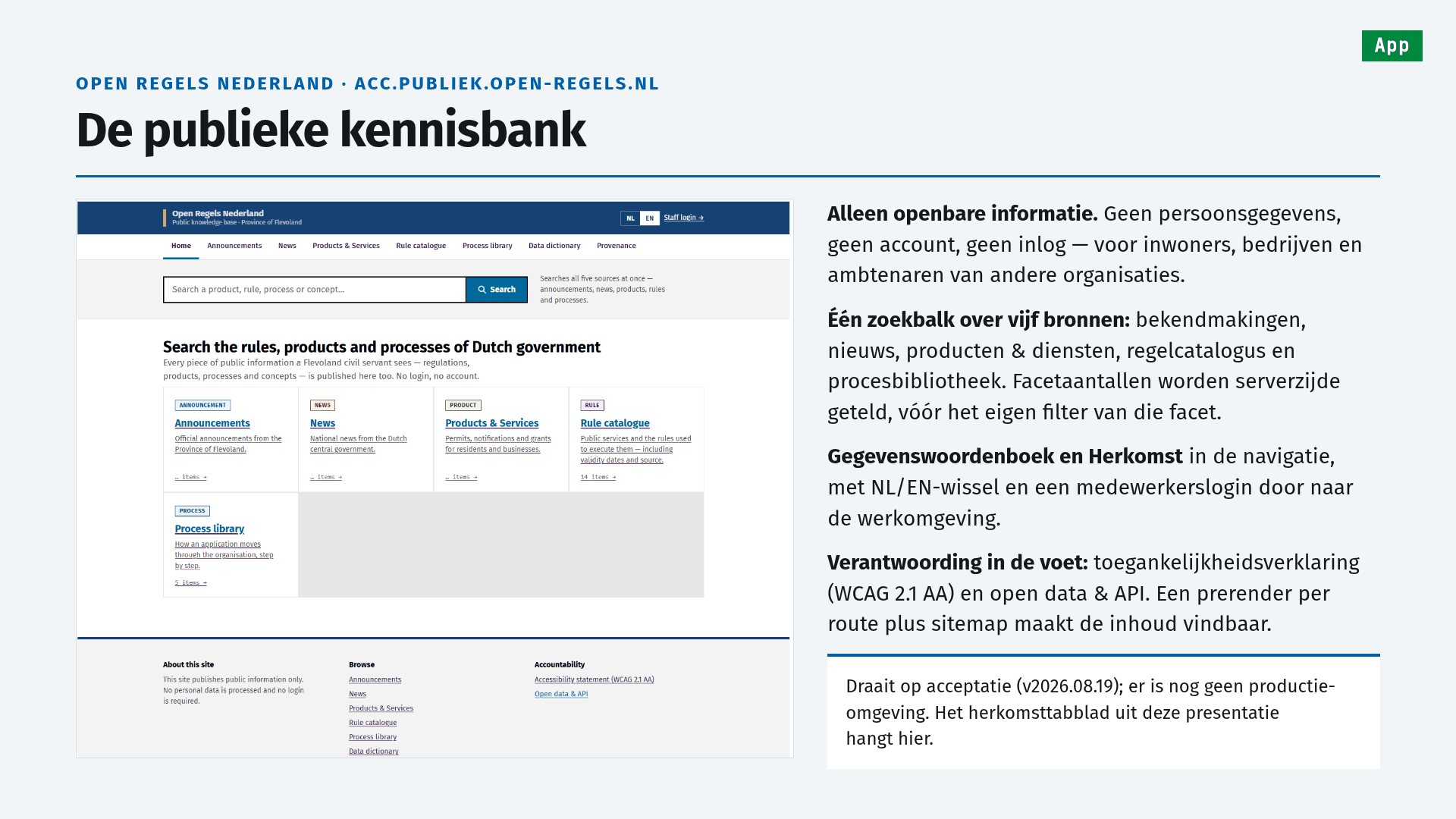
See the Public Site user guide.
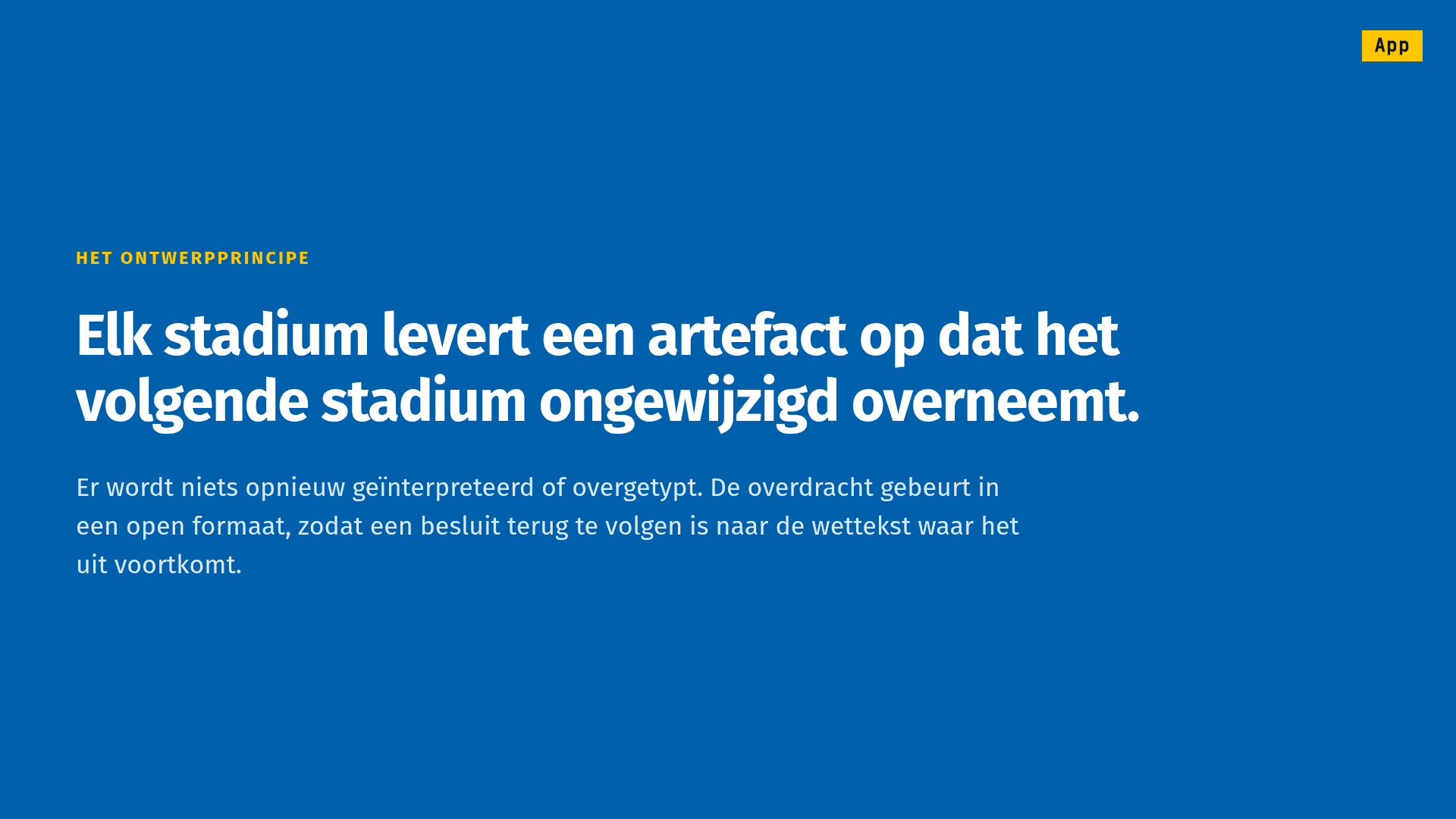
The design principle
Part two — Dev: how it is built and safeguarded
Components and standards
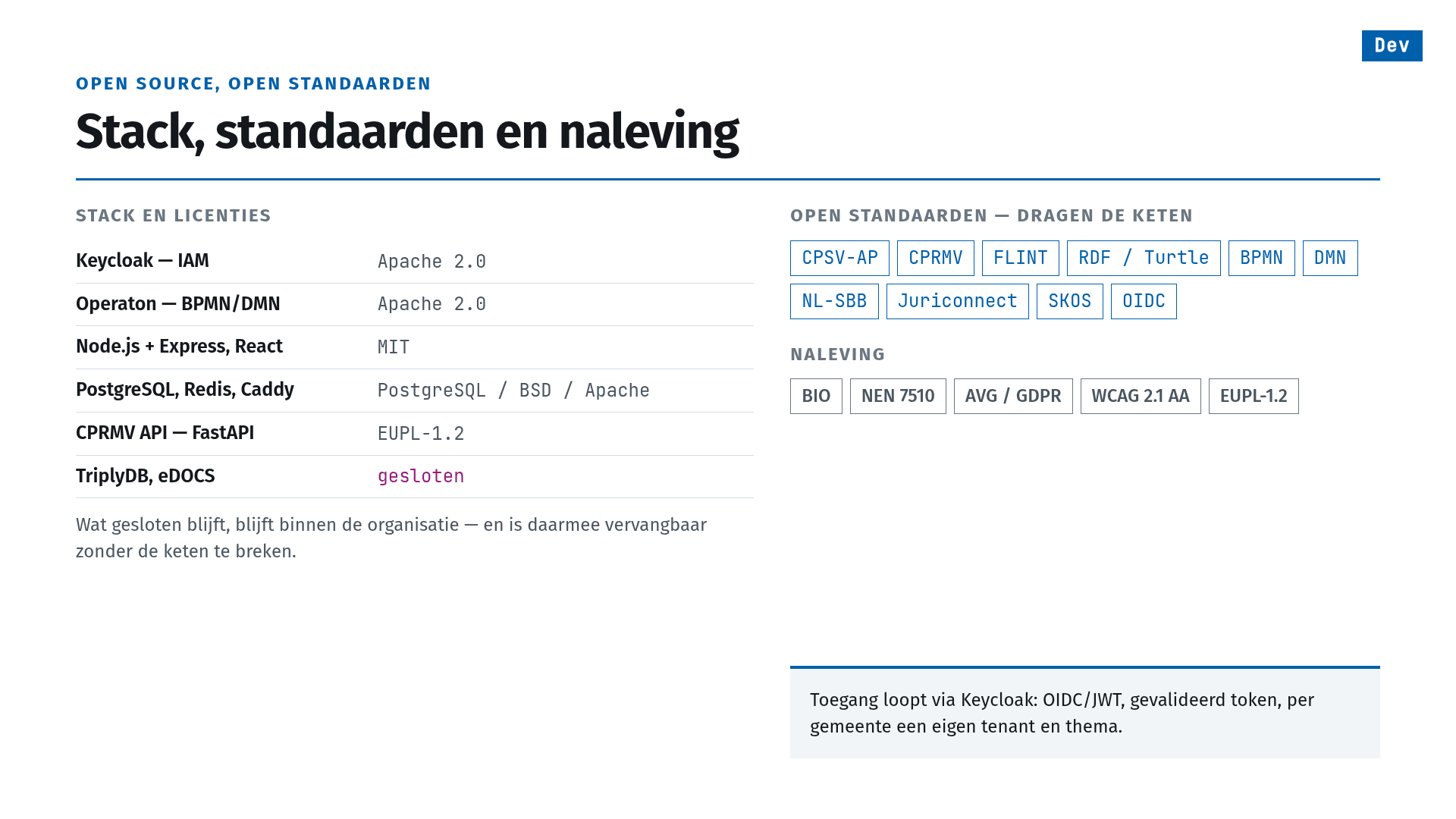
Signing and evidence
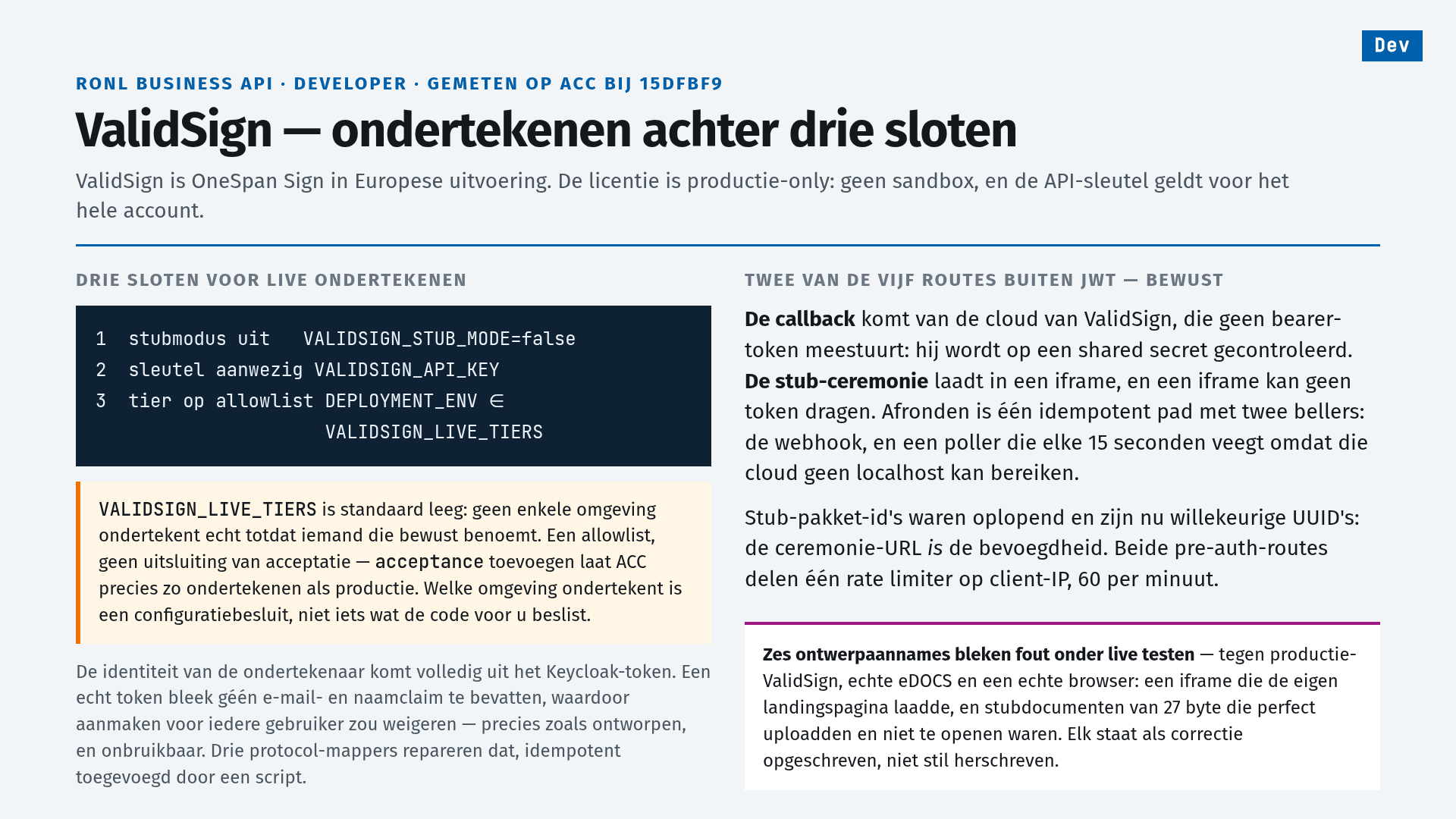
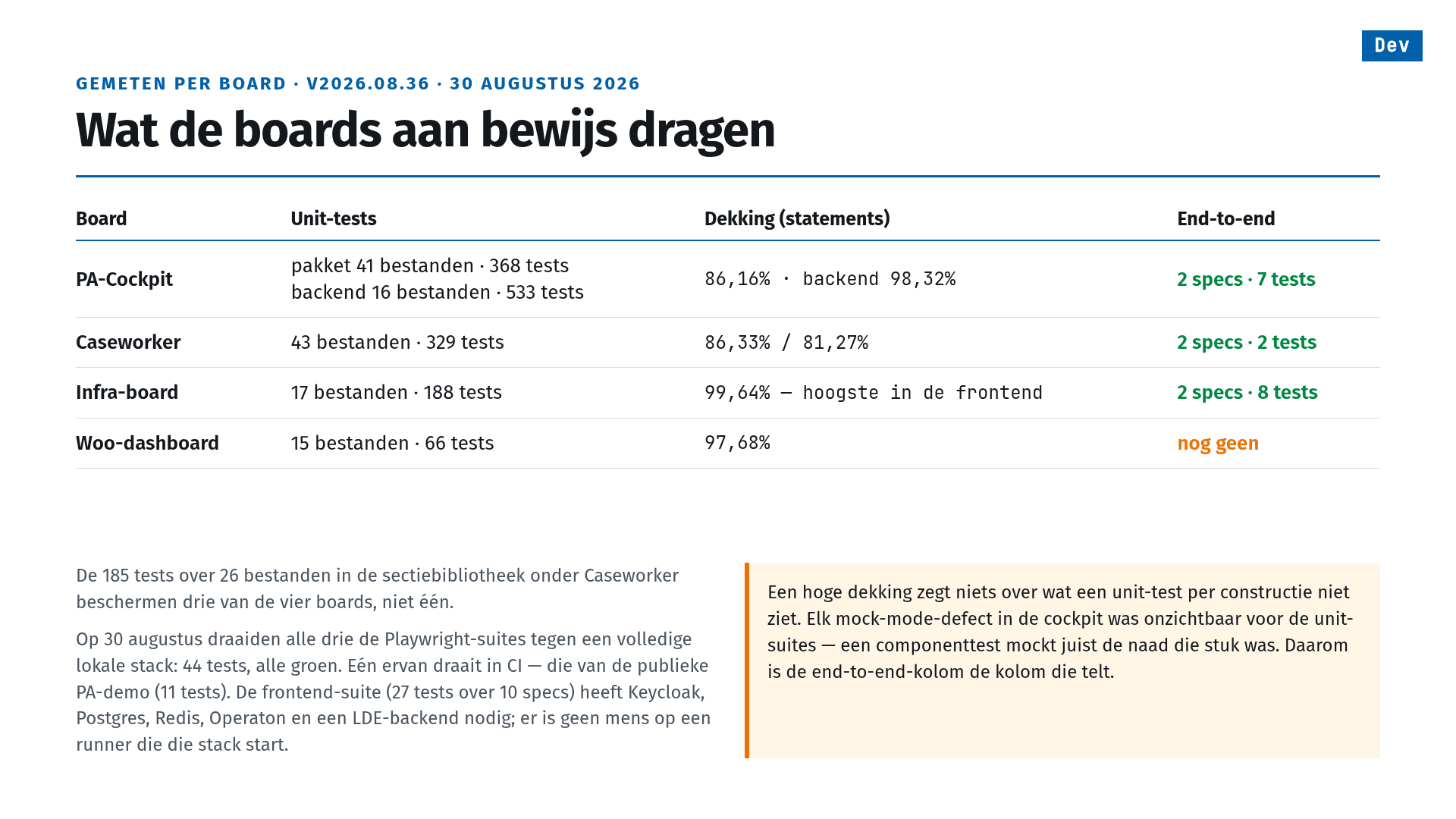
The prose behind these two slides is in the RONL Business API developer docs: ValidSign signing and Testing.
How the work is done
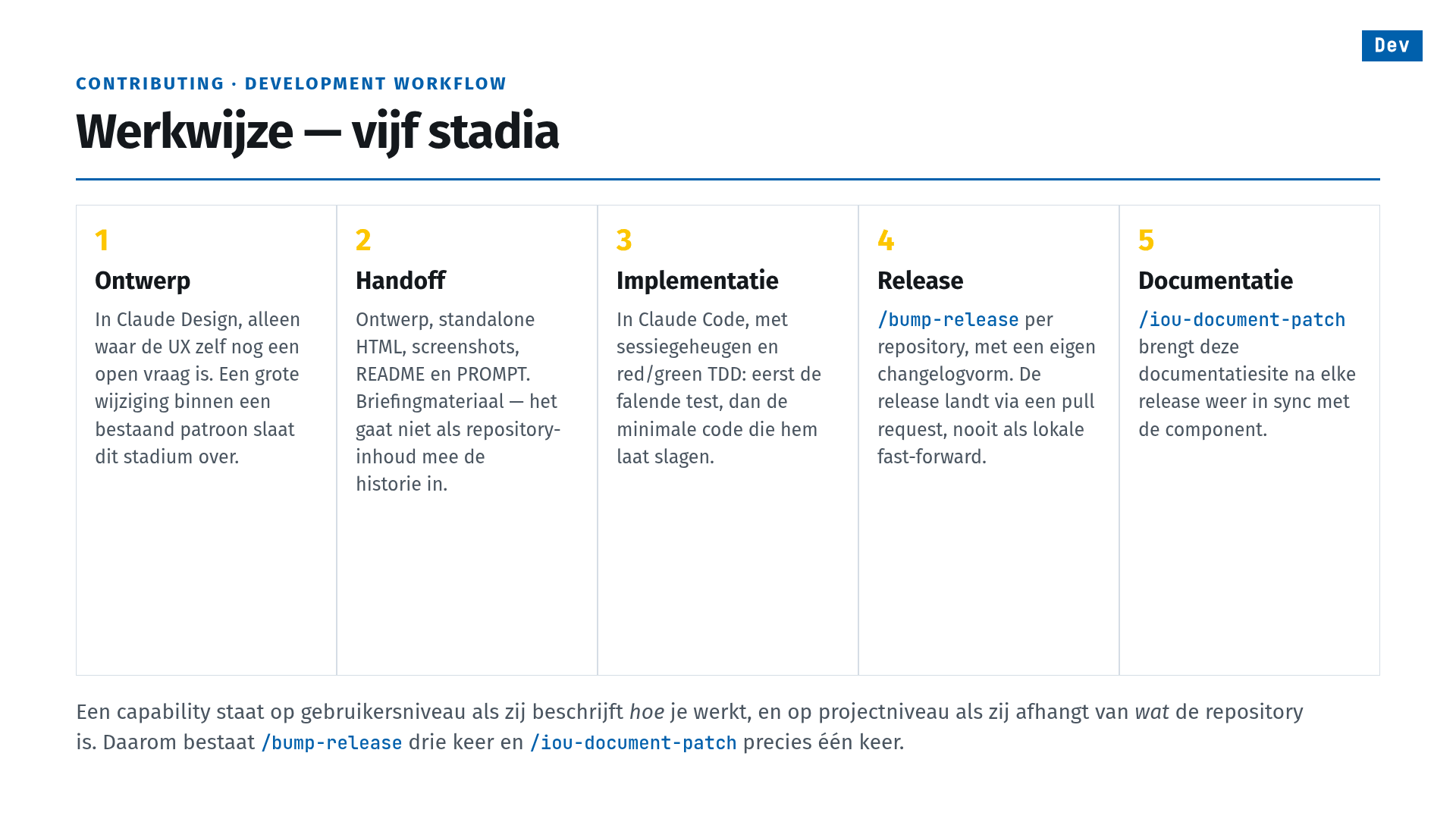
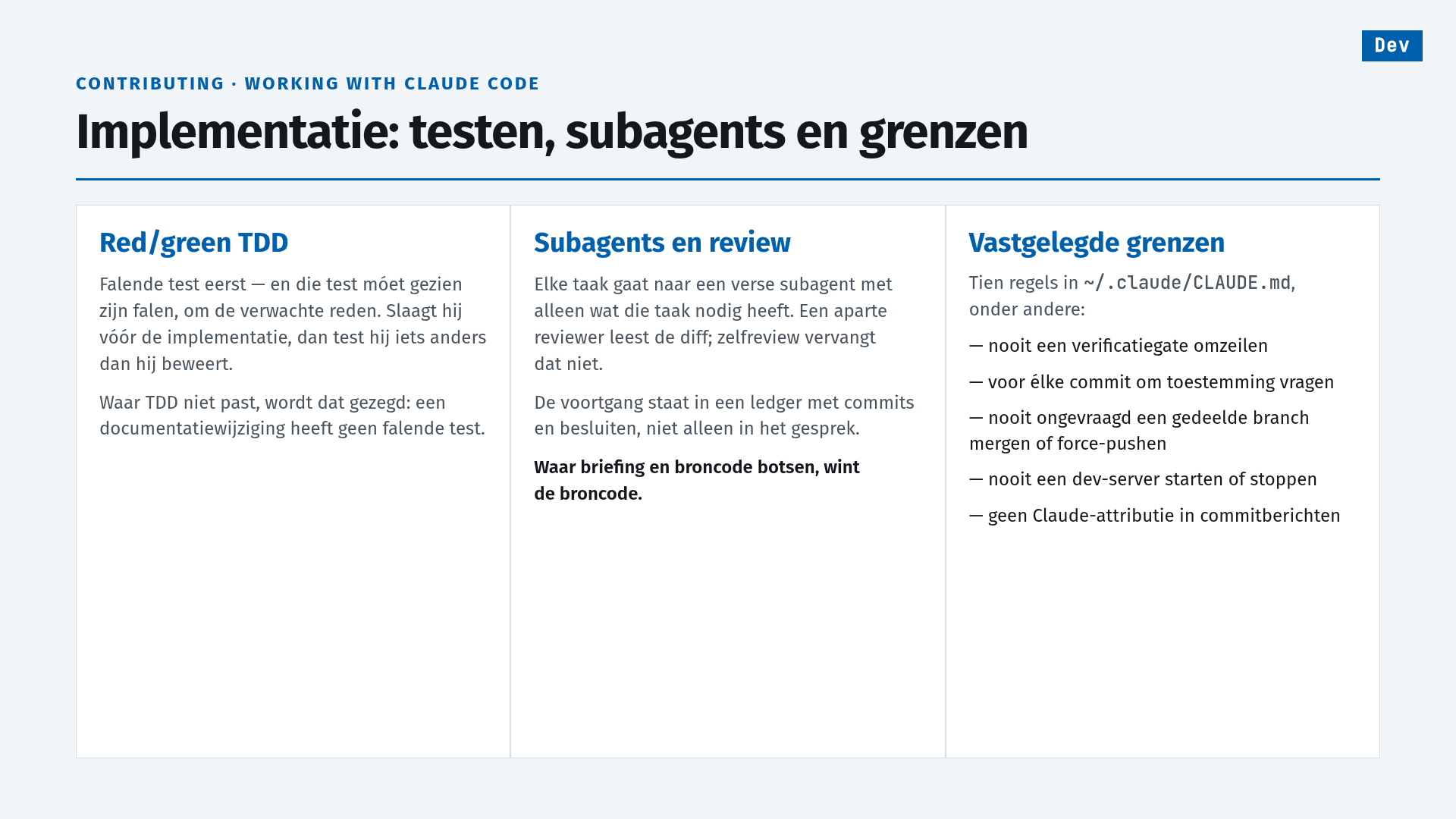
The five stages are written out in Development Workflow, and the boundaries in Skills and Boundaries.
Gates and the supply chain
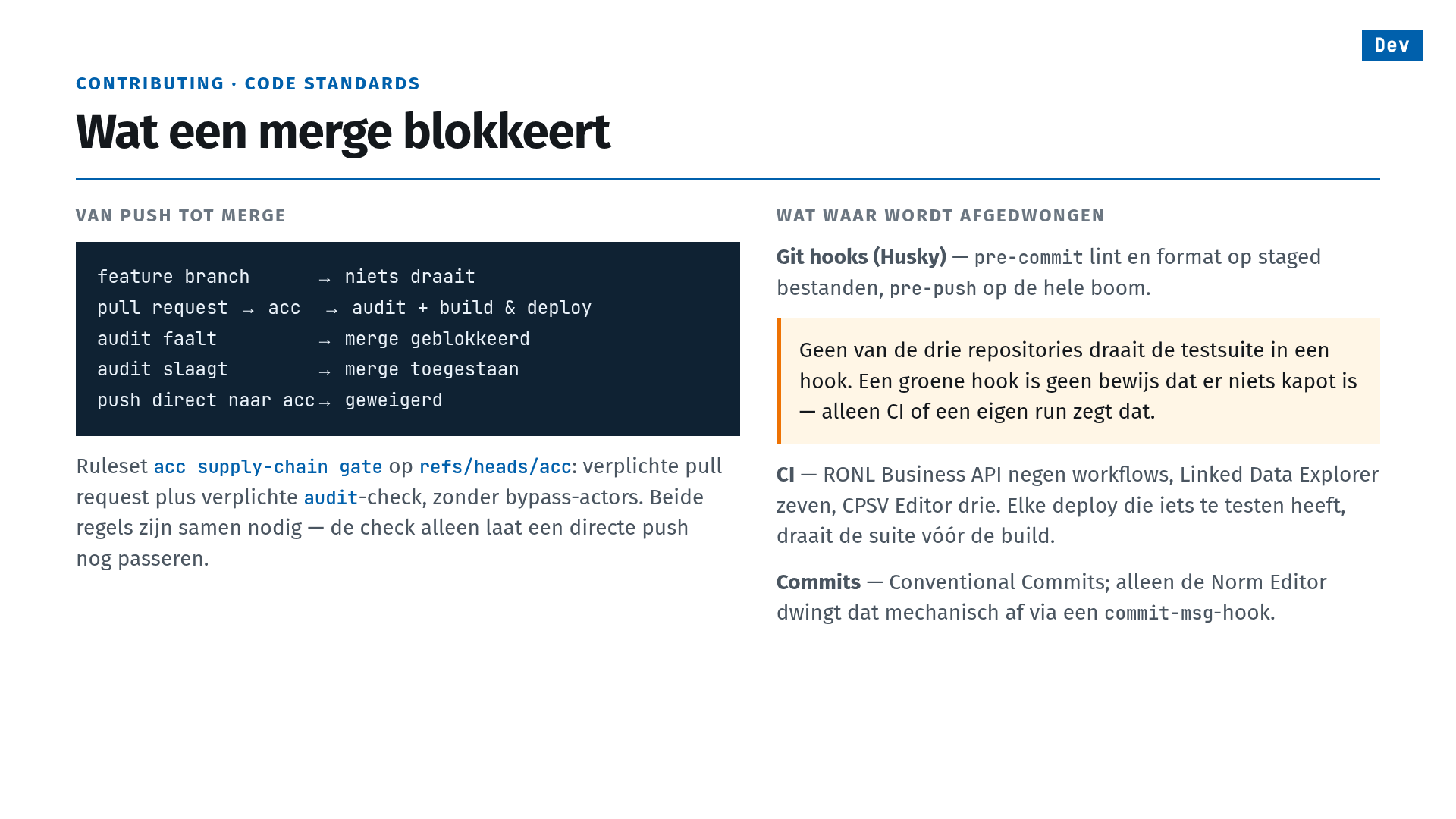
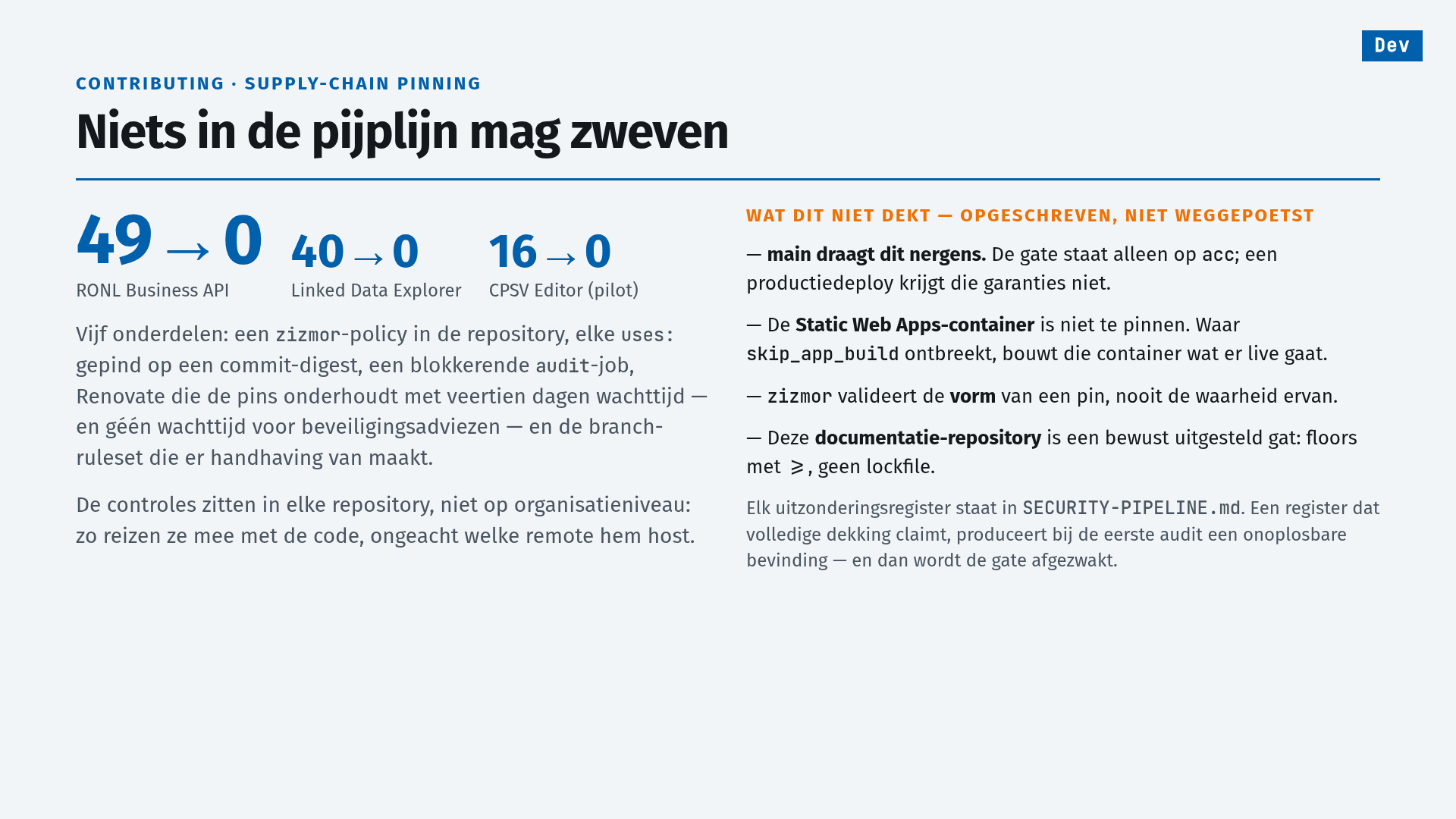
Current detail: Code Standards and Supply-Chain Pinning. See also the note at the top of this page.
Contributing, and what comes next
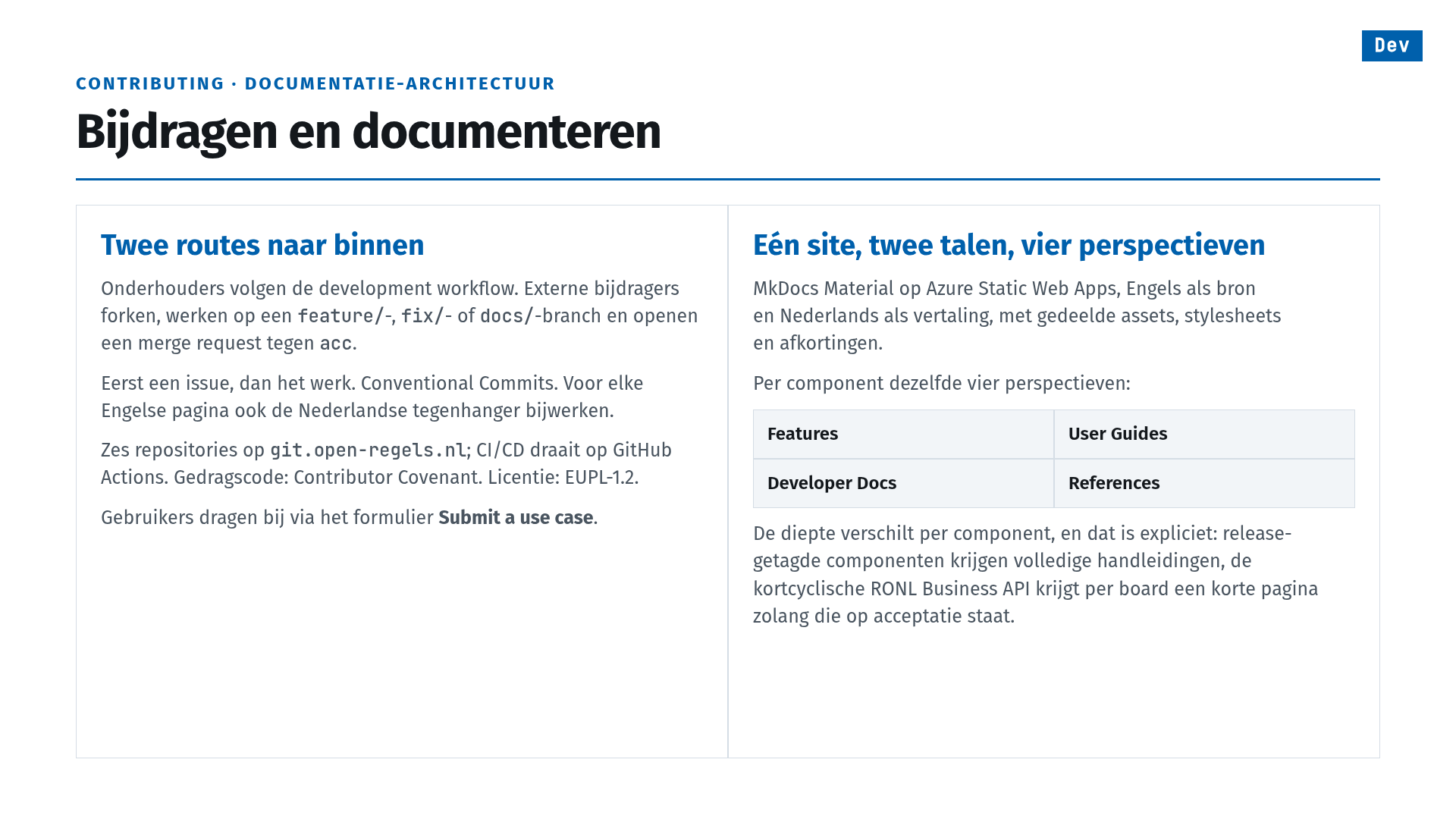
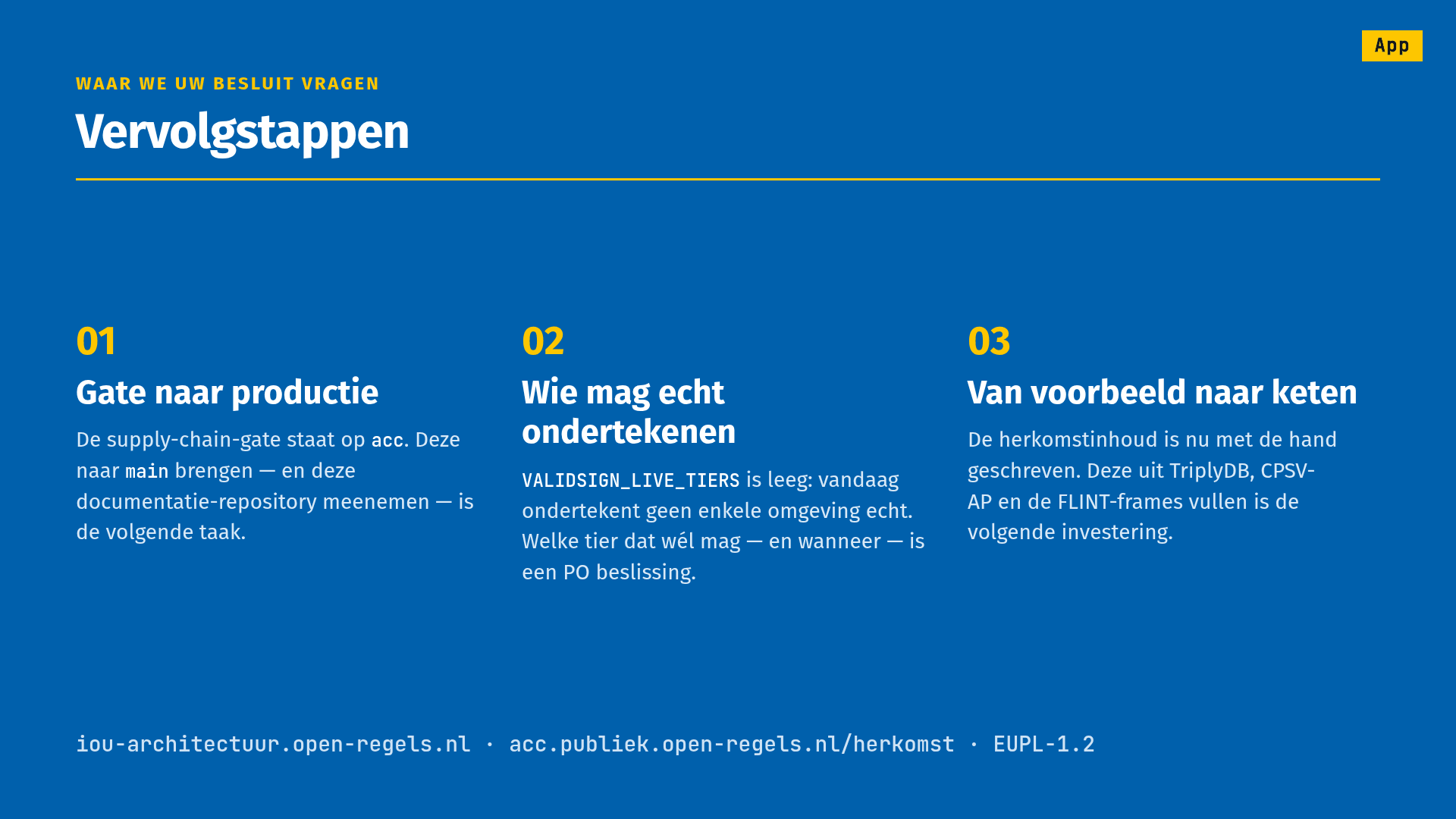
See Contributing and Documentation Architecture.